
In today’s online space, thousands of podcasts are available across multiple platforms to listen to at any given moment. Spotify, Apple Music, and Google Podcasts are just a few of the most popular platforms filled with content from anything you can think of, including mental health, politics, and even spooky stories. But, despite the quantity of content out there, whether you’re a large corporation or a small mom-and-pop business, you can still benefit from hosting your own podcast.
Main Goal: Find Listenership within Budget
There is a reason why so many podcasts exist — it’s affordable to start one. Apart from the hours spent drafting, recording, and editing, there are no monetary expenses associated with publishing your episodes. For shows that are just starting, this is beneficial because it provides them accessibility and tools to grow their podcast with very little to no upfront costs.
Essentially, podcasting can be a free form of marketing that reaches your target audience directly. Unlike SEO and paid ads, the consumer you wish to speak to will come to you through organic search. Of course, you can help scale your podcast with social media or by posting on your website, but those who need your content will naturally search for it.
Let’s Acknowledge the Pandemic Boom
Although podcasts were already growing in popularity around 2016, the pandemic’s effects increased listenership by 40% from 2020 to 2022. Instead of 1 out of 4 people listening to podcasts at any given point in their week, the number increased to 1 out of 3 people listening to a podcast. Although the pandemic is now behind us, the number of podcast listeners has not decreased.
Its popularity holds because podcasts are easy to access and entertain listeners while they commute, sit in the office, exercise, and even while cooking or winding down for the night. Since the platforms make it easy to listen when they want, it’s easier to have more bandwidth when considering reach and listenership.
Podcasting is not new to DAC (Hi there, it’s Stephanie). During the pandemic, I experimented with podcasting for the first time and, as a result, created a short show called Fefie Ann: Millennial Life. Its eight episodes were designed for fun with limited structure, no script, and it proved that my friends have an extremely high tolerance for my voice (plus, I convinced a few to join me as guest stars). Even with my inexperience at the time, I was able to reach over 100 listeners per episode and generate enough income to buy a romance novel for my Kindle.
Scaling Reach Passively
Software like Spotify Creators allows users to upload and share content that extends past the Spotify app. Creators are given a unique link, known as an RSS link, for easy sharing on other podcasting platforms, your website, and even social media. Here is what is shared of your show in an RSS link:
- Podcast title
- Show description
- Audio files
- Artwork

Start Building Audience Trust and Online Authority
Trust and authority are crucial to the success of podcasting, just as they are in other media. If people don’t know about you, why would they bother listening to your content? If you cannot build authority and trust in what you are saying? Why would they take your content into consideration?
Think about what we do here at Diana Alexia Creations: we are a boutique-style digital marketing agency with a focus on content writing (although we do other things, too; please check out our services page). If we started a podcast randomly about baking and didn’t tie that back to what we do as an agency, why would anyone believe we are good bakers?
Now that I think about it, maybe making cookies while learning how to write a blog could be kind of fun — although I see a baking mishap in my near future!
Building audience trust and online authority takes time, achieved through consistent posting and creating episodes relevant to your niche. While it’s difficult to record an episode on your own, it is still possible to relay relevant and valuable information. Treat it like you’re a professor, with just a little less preaching and more personality (sorry for the jab here).
Over time, as your show grows, you’ll be able to feature guests in episodes who have recognition on their own, further securing your own authority. Plus, when you add someone else, the show can get really entertaining if you want it to be (include wine with caution, okay?).
End Goal: Tie Your Podcast Back to Your Business
Every business owner should tie all their marketing strategies back to the core purpose of their business. If not, we would be doing work for nothing. When a company starts a podcast show, it should include a few key elements to draw its target audience back to its social platforms and product/service web pages.
This can be accomplished through carefully inserted CTAs, talking about your products as part of the topic of the episode, and using old blog content to fuel episode topic ideas. Just because you are podcasting doesn’t mean you need to reinvent the wheel. Repurposing content is a common practice out there, and many companies utilize it to streamline their content strategies.
Repurposing old content makes it easier to design podcast episodes because you have already recently researched the content for your website, newsletter, or blog. Having recent exposure to sources and materials helps develop scripts more easily. If you are using blog posts and website content to fuel information for your podcast, ensure that you embed episodes relevant to each (keep in mind that this works as a page update to maintain freshness, which your website audit will love).
Make Some Side Money
Once podcasts reach a specific audience size, hosts can potentially earn money from their episodes. Brands have been working with podcasters for years, having discovered that their audience is receptive to messages from their hosts. Think about it like YouTube influencers, and how they seamlessly promote products and services through their videos. This can work on podcasting, too.
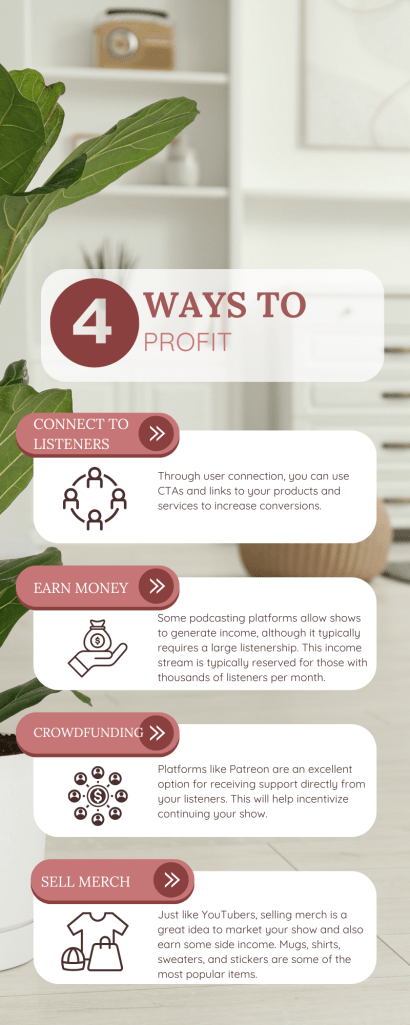
Connect with Your Listeners
Podcasts are very much conversational. While there is a script, most hosts incorporate their personalities into their content, making it easier for listeners to feel a connection with their hosts. This creates an instant community that wasn’t there before. These are people who not only appreciate what you have to say, but also genuinely like you.
Companies use this humanization strategy to earn money. Including CTAs, product links, and other conversion tools will help your business generate income.
Earn Money
Some podcasting platforms allow shows to generate income, although it typically requires a large and dedicated following. This income stream is generally reserved for those with thousands of listeners per month. For example, Spotify Creators requires 2,000 listeners within 30 days.
Podcasters can also participate in affiliate marketing by providing a unique link to listeners, promoting certain products or services recommended to their audience. Just like social media influencers, if you record your podcast episode live in video format, users may want to know where you sourced your clothes, furniture, or equipment. Amazon offers a popular program that many people quickly qualify for. You can learn more about it on their website.
Crowdfunding and Subscriptions
Using platforms like Patreon or Substack can help podcasters earn some income if they provide exclusive content to their listeners. Realistically, this shouldn’t be the first thing to do to promote your content, but it can be fruitful after building an audience.
Merch!
Shirts, sweaters, mugs, and more. Many websites offer a commission when a purchase is made. This is especially true if you launch a new store and conduct a marketing campaign to promote it.
How to Promote Your Podcast
Marketing your show is just as important as the design and editing. No one will watch your show if they don’t know about it. Promote your show on social media platforms, such as LinkedIn, Instagram, YouTube, and X (formerly Twitter), to reach the broadest possible audience.
Make Sure You’re Posting Consistently
Starting with a monthly episode is not a bad idea. It provides just enough content to keep the audience engaged without feeling overwhelmed, while also allowing you to manage other projects. One tip is to decide on your content before writing the script or recording. If you post monthly (and use your old blogs as a source of topics), you will already have enough content to plan for the whole year.
Additionally, do not fear the AI tools. AI tools are helpful when you feel stretched thin and can’t decide on hurdles like content topics, launch times, script writing, and more. Remember that AI is a tool to help you do better, not do all the work; so use it strategically.
Speaking of podcasts—Moonlight Marketing Bytes is Making its Debut

Diana Alexia Creations is entering the podcast space, producing content that is easily digestible in bite-sized episodes. Moonlight Marketing Bytes will cover quick educational marketing topics, including what’s trending and even going back to basics.
Our first episode is out now! Follow us as we start our new adventure wherever you listen to podcasts.
Do You Like Our Blogs? Subscribe Today!
Diana Alexia Creations publishes frequent blogs about digital marketing, marketing trends, and consumer behavior. Get our blogs right in your inbox when you subscribe today.
Don’t Forget About Our Monthly Newsletter
Find out what is happening each month at Diana Alexia Creations! We will discuss our latest news, products, and fun facts from that month. Subscribe now!

 Stephanie Ann Digital Marketing | SEO-Focused Content, Email & Website Support
You must be logged in to post a comment.